GO-TKM

Our experts are active at conferences and events worldwide.

Knowledge Mobilization in the Social Sciences and Humanities: Moving from Research to Action

In the decisive quest for global environmental and social balance, ignorance—in the form of intolerance, superstition, dogmatism and self-denial patterns—is the worst liability and knowledge mobilization—in the form of transparency, public awareness, community action, social innovation and international reorganization—the best asset. Major landmarks in human history may well be described as transcendent knowledge mobilizations. Perhaps the most transcendent knowledge mobilization so far, and the first of al global scale, is required right now. -Francisco Javier Carrillo, Professor of Knowledge Systems and :Chairman of The World Capital Institute.
Read More »

Leading with the Future in Mind: Knowledge and Emergent Leadership

We exist in a new reality, a global world where the individuated power of the mind/brain offers possibilities beyond our imagination. It is within this framework that thought leading emerges, and when married to our collaborative nature, makes the impossible an everyday occurrence. Leading with the Future in Mind, building on profound insights unleashed by recent findings in neuroscience, provides a new view that converges leadership, knowledge and learning for individual and organizational advancement.
This book provides a research-based tour de force for the future of leadership. Moving from the leadership of the past, for the few at the top, using authority as the explanation, we now find leadership emerging from all levels of the organization, with knowledge as the explanation. The future will be owned by the organizations that can master the relationships between knowledge and leadership. Being familiar with the role of a knowledge worker is not the same as understanding the role of a knowledge leader. As the key ingredient, collaboration is much more than “getting along”; it embraces and engages. Wrapped in the mantle of collaboration and engaging our full resources—physical, mental, emotional and spiritual—we open the door to possibilities. We are dreaming the future together.

Read More »

Decision-Making in The New Reality: Complexity, Knowledge and Knowing

We live in a world that offers many possible futures. The ever-expanding complexity of information and knowledge provide many choices for decision-makers, and we are all making decisions every single day! As the problems and messes of the world become more complex, our decision consequences are more and more difficult to anticipate, and our decision-making processes must change to keep up with this world complexification. This book takes a consilience approach to explore decision-making in The New Reality, fully engaging systems and complexity theory, knowledge research, and recent neuroscience findings. It also presents methodologies for decision-makers to tap into their unconscious, accessing tacit knowledge resources and increasingly relying on the sense of knowing that is available to each of us.
Almost every day new energies are erupting around the world: new thoughts, new feelings, new knowing, all contributing to new situations that require new decisions and actions from each and every one of us. Indeed, with the rise of the Net Generation and social media, a global consciousness may well be emerging. As individuals and organizations we are realizing that there are larger resources available to us, and that, as complex adaptive systems linked to a flowing fount of knowing, we can bring these resources to bear to achieve our ever-expanding vision of the future. Are we up to the challenge?

Read More »

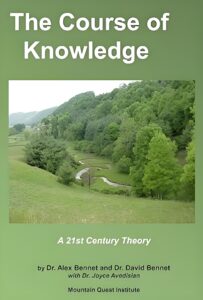
The Course of Knowledge: A 21st Century Theory

Knowledge is at the core of what it is to be human, the substance which informs our thoughts and determines the course of our actions. Our growing focus on, and understanding of, knowledge and its consequent actions is changing our relationship with the world. Because knowledge determines the quality of every single decision we make, it is critical to learn about and understand what knowledge is. From a 21st century viewpoint, we explore a theory of knowledge that is both pragmatic and biological. Pragmatic in that it is based on taking effective action, and biological because it is created by humans via patterns of neuronal connections in the mind/brain.
In this book we explore the course of knowledge. Just as a winding stream in the bowls of the mountains curves and dips through ravines and high valleys, so, too, with knowledge. In a continuous journey towards intelligent activity, context-sensitive and situation-dependent knowledge, imperfect and incomplete, experientially engages a changing landscape in a continuous cycle of learning and expanding. We are in a continuous cycle of knowledge creation such that every moment offers the opportunity for the emergence of new and exciting ideas, all waiting to be put in service to an interconnected world. Learn more about this exciting human capacity!

Read More »

Higher Truths Knowledge Navigator: Dynamic Scaffolding and other Tools and Metrics

In support of Seeking Higher Truths through Symbiotic Intelligence in the Natural World (available on Amazon), Dynamic Scaffolding emerges as a critical Knowledge Capacity providing the cognitive architecture necessary for systematic ascent toward universals in an era of unprecedented complexity and interconnection. This book was developed as a resource book for Seeking Higher Truths, providing tools and measurement approaches and diving deeper into symbiotic intelligence.

Read More »

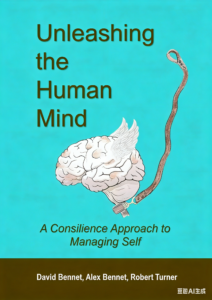
Unleashing the Human Mind: A Consilience Approach to Managing Self

What does it mean to be human? Increasingly, we recognize that we are infinitely complex beings with immense emotional and spiritual, physical and mental capacities. Presiding over these human systems, our brain is a fully integrated, biological, and extraordinary organ that is preeminent in the known Universe. Its time has come. This book is grounded in the Intelligent Complex Adaptive Learning System (ICALS) theory based on over a decade of researching experiential learning through the expanding lens of neuroscience.

Read More »